Blood pressure measurement forms a foundational pillar of patient assessment across emergency and routine care settings.
The aneroid sphygmomanometer from MedTechKits delivers this essential function through its compact, mechanical design that prioritizes reliability without external power requirements.
Seasoned clinicians and aspiring EMS professionals alike turn to such emt tools for their consistent performance during high-stakes scenarios and skill-building exercises.
Closer scrutiny of their mechanical foundations and material selections uncovers layers of engineering that sustain long-term diagnostic fidelity. These core attributes seamlessly introduce the abstract exploration of aneroid technology’s enduring place in modern medical diagnostics.
MedTechKits and the Mission Behind Reliable EMS Tools
A well prepared medkit represents far more than a collection of instruments. It reflects the readiness and confidence of the clinician who relies on it when patient care demands precision.
MedTechKits approaches equipment design with this philosophy at its core. The company focuses on developing practical tools that help EMT students, instructors, and working responders build dependable diagnostic workflows.
Each product is selected or engineered with training environments and field conditions in mind, where reliability and simplicity often matter more than complexity.
The Continued Relevance of MedTech Sphygmomanometer
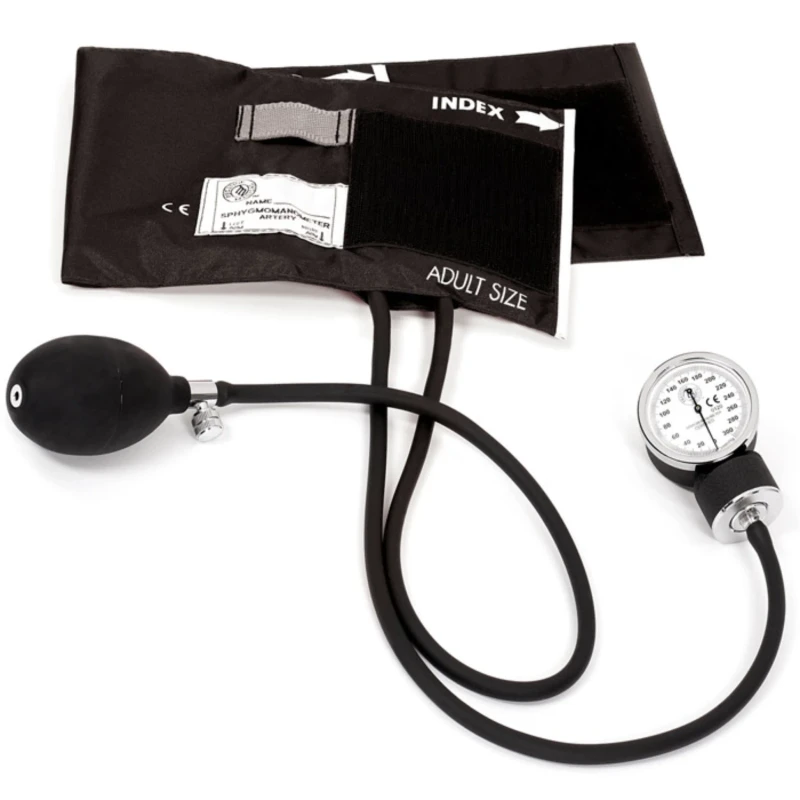
In contemporary medical practice, aneroid sphygmomanometer available through MedTechKits maintains significant importance due to their reliability in settings where electronic devices may fail.
These instruments provide accurate readings without dependence on batteries or power sources, making them ideal for field use and training environments.
Despite advancements in automated monitors, the manual aneroid design offers tactile feedback that enhances user proficiency. Professionals value this technology for its precision in critical situations.
Principles of Operation and Pressure in Sphygmomanometry
The aneroid manometer operates by converting cuff pressure into mechanical displacement via a sensitive diaphragm. This transduction mechanism translates arterial pulsations indirectly through controlled cuff inflation and deflation.
The gauge dial then displays the resulting values in millimeters of mercury for immediate clinician interpretation. The process integrates the auscultatory method to capture dynamic blood flow changes during gradual pressure release.
Accurate transduction ensures detection of subtle systolic and diastolic transitions without external power. Such mechanics naturally highlight the role of durable materials in sustaining long-term performance and structural integrity in medical hardware.
Analysis of PVC and High Denier Nylon
High-denier nylon forms the outer cuff layer, delivering exceptional tensile strength and resistance to abrasion during repeated clinical applications. This fabric construction remains stain-resistant and easy to clean while maintaining flexibility for proper arterial compression.
Latex-free formulations further enhance biocompatibility across diverse patient populations. Polyvinyl chloride tubing and bladder components provide airtight sealing and elastic recoil essential for pressure retention.
Standardization of Measurements within the 0 to 300 mmHg Range
Calibration protocols anchor the aneroid gauge scale precisely from zero to three hundred millimeters of mercury to encompass full adult blood pressure spectra.
Index markings and range indicators on the dial facilitate rapid visual confirmation during inflation and deflation phases. Uniform increments ensure consistency when comparing readings across multiple instruments or sessions.
This standardized span aligns with established physiological norms while preventing gauge overload in hypertensive cases. Integrated artery indicators and holder mechanisms support repeatable positioning for every measurement cycle.
Impact of Cuff Sizing on Diagnostic Accuracy
Proper adult cuff dimensions spanning ten to sixteen inches accommodate varying arm circumferences to avoid over- or under-compression artifacts. Substandard materials or loose fittings introduce air leaks that distort pressure readings and inflate error margins.
High-quality construction therefore minimizes false positives or negatives that could mislead treatment pathways. Cuff sizing precision combined with gauge reliability determines whether systolic and diastolic values reflect true arterial dynamics.
Inaccurate sizing disproportionately affects obese or pediatric-adjacent adult patients during routine screening. These considerations elevate the importance of standardized clinical methodology for reliably detecting Korotkoff sounds in every examination.
Methodology for the Detection of Korotkoff Sounds
The examiner inflates the cuff rapidly to thirty millimeters of mercury above anticipated systolic pressure before initiating controlled deflation at two to three millimeters per second.
Phase one Korotkoff sounds mark systolic onset as turbulent flow resumes beneath the cuff, while phase five signifies diastolic cessation when sounds disappear completely. Proper stethoscope placement over the brachial artery ensures clear acoustic transmission throughout the cycle.
Consistent deflation rate and quiet surroundings enhance sound differentiation across all five phases without premature termination. Technique proficiency directly correlates with inter-observer agreement in manual recordings.
Comparative Challenges in Manual BP Acquisition
Manual acquisition demands acute auditory discrimination and steady hand control amid ambient noise or patient movement that automated devices largely eliminate.
In contrast, advanced systems such as a resus monitor provide continuous digital readings that remove much of the operator variability. Operator fatigue during high-volume shifts can introduce subtle timing errors absent in digital oscillometric methods.
Yet the tactile and auditory insights gained through manual techniques foster deeper physiological understanding unavailable in fully automated systems.
Maintenance Protocols for Aneroid Manometers
International guidelines mandate annual calibration against reference mercury columns or certified digital standards to verify accuracy within plus or minus three millimeters of mercury.
Zeroing procedures before each use confirm needle alignment at atmospheric pressure while visual inspection detects diaphragm fatigue or linkage wear. These protocols preserve transduction fidelity throughout the instrument’s service life.
Routine storage away from extreme temperatures and periodic bladder integrity checks prevent micro-leaks that degrade long-term reliability. Documentation of maintenance history supports compliance during institutional audits and quality assurance reviews.
Frequently Asked Questions
Q1. How does an aneroid sphygmomanometer perform during ambulance transport with constant vibration and road noise?
The mechanical aneroid gauge in this model holds steady during typical ambulance vibrations when properly secured in a padded compartment or kit pocket. EMTs report reliable readings provided the device is not dropped or subjected to extreme shocks that could misalign the internal mechanism.
Q2. What quick checks can EMTs perform at the start of a shift to confirm the gauge reads zero?
Simply deflate the cuff completely and observe whether the needle settles precisely at the zero mark on the dial. A gentle tap on the gauge housing can free any minor sticking caused by transport jostling.
Q3. How should EMTs adapt adult cuff placement for bariatric patients to prevent slippage and maintain accurate compression?
Position the cuff higher on the upper arm or forearm if the standard 10- to 16-inch range proves insufficient, always centering the bladder over the brachial artery. Secure the velcro closure firmly while ensuring the cuff lies flat without wrinkles or gaps.
Q4. How often should the inflation bulb and release valve be inspected after frequent field use?
Conduct a visual and functional check at the end of each shift for cracks or air leaks by inflating and holding pressure. In high-call-volume services, perform a detailed inspection weekly or after approximately 50 uses.